Want to start an Airbnb business but do not own a property? You are not alone.
Rent to rent airbnb, also known as Airbnb rental arbitrage, has become a popular way for new hosts to enter the short-term rental market without buying real estate. Instead of purchasing a property, you rent one long term, get written permission from the landlord, furnish it, and list it for short stays.
The model can work well, but it is not free money. You still need startup capital, legal approval, strong market research, and smooth guest operations.
That is where ReadyForGuest helps. Whether you are launching your first Airbnb or managing a growing portfolio, ReadyForGuest supports hosts with automation, tools, and expert guidance to improve pricing, visibility, and guest experience.
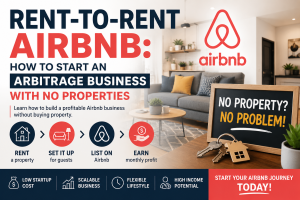
What Is Rent-to-Rent Airbnb?
Rent-to-rent Airbnb is a business model where you lease a property from a landlord and then operate it as a short-term rental.
Your profit comes from the difference between your total monthly costs and your booking income.
For example, you may pay rent, bills, cleaning, insurance, and maintenance each month. If your Airbnb income is higher than those costs, the remaining amount is your profit.
The most important part is permission. You must have written approval from the landlord before listing the property. Subletting without permission can lead to eviction, legal issues, and loss of money.
Can You Start Airbnb Without Owning Property?
Yes, you can start an Airbnb business without owning property.
The two main options are co-hosting and rental arbitrage. Co-hosting means managing someone else’s Airbnb for a fee. Rental arbitrage means renting a property yourself and legally subletting it for short stays.
Rental arbitrage can offer more control and higher income potential, but it also comes with more risk. You are responsible for rent every month, even when bookings are slow.
That is why the numbers need to work before you sign anything.
Is Airbnb Arbitrage Profitable?
Airbnb arbitrage can be profitable when the property is in the right location, the rent is sensible, demand is strong, and operating costs are controlled.
It works best in areas with steady guest demand, such as city centres, business districts, tourist locations, transport hubs, university areas, and places with contractor or relocation demand.
However, profit is never guaranteed. You need to allow for quiet months, cleaning costs, guest supplies, utilities, repairs, platform fees, insurance, and management support.
The goal is not just high revenue. The goal is healthy net profit.
Step 1: Research the Market
Before choosing a property, research the local short-term rental market.
Look at average nightly rates, occupancy, seasonality, guest demand, and similar listings nearby. A good area should have enough demand across weekdays and weekends.
You also need to check local rules. Some areas require permits, licences, planning approval, or specific safety standards. Flats may also have building or leasehold restrictions.
Do not skip this step. A property can look perfect but still fail if the rules do not allow short-term letting.
Step 2: Run the Numbers
Once you find a possible property, calculate the full cost.
Include rent, council tax, utilities, broadband, cleaning, laundry, guest supplies, insurance, maintenance, software, platform fees, and management costs.
Then estimate realistic monthly revenue. Avoid using only best-case figures. Look at conservative numbers too.
A good rent-to-rent Airbnb deal should still make sense if occupancy drops for a month or two.
You should also budget for startup costs such as deposit, rent in advance, furniture, linen, kitchenware, smart locks, safety equipment, photography, and setup cleaning.
Step 3: Find the Right Property
Not every rental property is suitable for Airbnb arbitrage.
Look for properties with strong guest appeal, good transport links, clean layouts, reliable WiFi options, and access to demand drivers such as offices, hospitals, universities, airports, attractions, and event venues.
Avoid properties with high rent, unclear permissions, poor maintenance, awkward layouts, or weak local demand.
Remember, you are not just renting a home. You are choosing a business asset.
Step 4: Pitch the Landlord Honestly
Transparency is essential.
Tell the landlord exactly what you plan to do. Explain that you want to rent the property long term and operate it as a professionally managed short-term rental.
Focus on the benefits for the landlord. These may include guaranteed monthly rent, reduced void periods, regular cleaning, frequent property checks, professional guest screening, and quick reporting of maintenance issues.
Never hide your plan. If the landlord does not agree, move on.
Step 5: Get Written Permission
Written permission is non-negotiable.
Your lease or addendum must clearly allow short-term subletting. It should also confirm how the property can be used, who handles maintenance, what insurance is required, and any rules around guests.
Do not rely on a verbal agreement. Without written approval, your Airbnb business is at risk from day one.
Step 6: Furnish for Guests
Guests want a clean, comfortable, practical space.
Choose durable furniture, comfortable beds, fresh linen, good lighting, fast WiFi, kitchen essentials, and simple décor that photographs well.
Do not overdesign the property, but do not cut corners either. Cheap furniture that breaks quickly can damage reviews and increase costs.
Think like a guest. Is the bed comfortable? Is check-in easy? Is there enough seating? Can someone work from the property? Are the instructions clear?
Small details can improve reviews and help your listing stand out.
Step 7: Set Up Smart Operations
Airbnb arbitrage is easier when your systems are strong.
Use smart locks for remote check-ins, automated messages for guest communication, dynamic pricing for better rates, and cleaning checklists for consistent standards.
You should also have a reliable cleaner, handyman, plumber, electrician, and emergency contact before your first booking.
This is where ReadyForGuest can support you. ReadyForGuest combines automation with expert guidance to help hosts manage pricing, visibility, bookings, and guest experience more effectively.
Step 8: Create a Strong Airbnb Listing
Your listing needs to attract clicks and convert guests.
Use bright professional photos, a clear title, simple descriptions, and accurate details. Highlight the strongest features, such as transport links, workspace, parking, fast WiFi, local attractions, or family-friendly amenities.
Be honest about the property. Overpromising may get bookings at first, but it can lead to poor reviews later.
A strong listing should answer guest questions before they ask.
Step 9: Use Dynamic Pricing
Static pricing can hurt your income.
Short-term rental demand changes throughout the week and year. Weekends, holidays, events, and peak seasons may allow higher rates. Quieter periods may need more competitive pricing.
Dynamic pricing helps you adjust rates based on demand, seasonality, and booking trends.
ReadyForGuest helps hosts optimise Airbnb pricing and visibility, so listings can attract more bookings and generate higher revenue.
Step 10: Protect the Property
Because you do not own the property, protection matters even more.
Use guest screening, clear house rules, deposits where suitable, noise monitoring where legally allowed, and proper short-term rental insurance.
You should also inspect the property regularly and ask cleaners to report damage after each stay.
Protecting the property also protects your landlord relationship.
Common Mistakes to Avoid
The biggest mistake is subletting without written permission. This can end the business quickly.
Other common mistakes include choosing the wrong location, underestimating costs, ignoring local rules, using poor quality furniture, pricing badly, relying on weak cleaners, and treating Airbnb like passive income.
Rent-to-rent Airbnb is not passive. It is a hospitality business.
How ReadyForGuest Helps New Airbnb Hosts
ReadyForGuest is built for hosts at every stage, from first-time Airbnb operators to growing portfolio owners.
It helps you improve pricing, increase listing visibility, automate guest communication, and create a smoother guest experience. That means fewer manual tasks, better performance, and more confidence as you scale.
For rent-to-rent Airbnb hosts, this support can be especially valuable because margins, reviews, and operations all need to be managed carefully.
Final Thoughts
Rent-to-rent Airbnb can be a smart way to start an arbitrage business without owning property.
The model is simple, but success depends on doing it properly. Research the market, check the rules, run the numbers, get landlord permission, furnish well, create a strong listing, and manage guests professionally.
Airbnb arbitrage can still be profitable, but only when the property, pricing, and operations make sense.
With ReadyForGuest, hosts can use smarter automation and expert support to maximise Airbnb profits, improve guest experience, and scale with more confidence.
FAQs
Can I start Airbnb without owning property?
Yes. You can start through co-hosting or rent-to-rent Airbnb. With rental arbitrage, you rent a property and legally sublet it for short stays with written landlord permission.
Is rent-to-rent Airbnb legal?
It can be legal if the landlord gives written permission and the property meets local rules, building terms, insurance requirements, and safety standards.
How much money do I need to start Airbnb arbitrage?
Costs vary, but you usually need money for a deposit, rent in advance, furniture, insurance, cleaning setup, safety equipment, photography, and a cash reserve.
Is Airbnb arbitrage profitable?
Yes, it can be profitable in the right market. However, you must account for rent, bills, cleaning, repairs, insurance, platform fees, and slower booking periods.
What is the biggest risk of Airbnb arbitrage?
The biggest risk is fixed rent. You must pay rent every month even if your Airbnb has low occupancy.
How can ReadyForGuest help?
ReadyForGuest helps hosts optimise pricing, improve listing visibility, automate operations, and deliver a better guest experience, helping Airbnb businesses earn more and scale faster.